
Science communication has entered a golden age. No longer confined to dense academic journals or hidden away in university laboratories, groundbreaking discoveries are making headlines daily. Today, popular science news bridges the gap between complex research and public curiosity, translating revolutionary concepts into gripping narratives that anyone can understand.
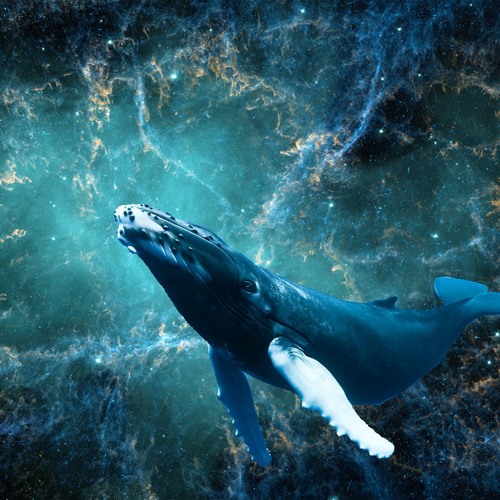
The sheer pace of innovation is staggering. From cosmic exploration to deep-sea discoveries and cellular manipulation, the scientific community is rewriting our understanding of reality. Staying informed about these breakthroughs is more than just a hobby—it is a front-row seat to the future of humanity.
Redefining Our Place in the Cosmos
Space exploration continues to dominate popular science headlines, and for good reason. The latest generation of space telescopes and planetary rovers are sending back data that challenges long-held astronomical theories.
The Search for Earth 2.0 Accelerates
Astronomers have recently detected a series of rocky exoplanets orbiting distant red dwarf stars within the “Goldilocks zone”—the precise orbital distance where liquid water can exist on a planet’s surface. Using advanced atmospheric spectroscopy, researchers have successfully identified water vapor and carbon signatures in these alien skies. This discovery brings humanity one step closer to answering the ultimate question: Are we alone in the universe?
Mars Missions Reveal Deep-Subsurface Secrets
While the surface of Mars looks like an arid, frozen desert, radar data from planetary orbiters and geological samples analyzed by automated rovers paint a completely different picture below the surface. Popular science reports highlight evidence of vast, subterranean liquid reservoirs and ancient organic molecules trapped inside rock layers. These findings suggest that if life ever existed on Mars, its remnants might still be preserved underground.
The Hidden Frontier: Discoveries in Deep-Sea Biology
While our eyes are often fixed on the stars, some of the most shocking popular science news comes from our own planet. The deep ocean remains largely unexplored, but recent deep-sea expeditions utilizing autonomous underwater vehicles (AUVs) are changing that.
Marine biologists exploring deep-ocean trenches have documented entirely new ecosystems operating completely independent of sunlight. Instead of relying on photosynthesis, these bizarre creatures utilize chemosynthesis, converting toxic chemicals spewing from hydrothermal vents into biological energy.
Furthermore, the discovery of giant, glowing invertebrates and unique microbial life forms in the ocean’s midnight zone is doing more than just expanding biological catalogs. Biochemical companies are studying the genetic sequences of these extreme organisms to develop next-generation antibiotics and heat-resistant enzymes for industrial use.
Bioprinting and the Future of Medicine
In the realm of health and biotechnology, science fiction is rapidly becoming medical fact. One of the most heavily discussed topics in popular science media is the rapid advancement of 3D bioprinting.
Using a patient’s own stem cells as “bio-ink,” laboratory scientists have successfully printed functioning, microscopic models of human organs, including kidneys and cardiac tissues. This technology is revolutionizing medical testing by allowing researchers to test new pharmaceuticals on realistic human tissue models rather than relying heavily on animal testing.
The ultimate goal, which is drawing closer every day, is to print full-scale, transplantable human organs. This advancement would eliminate organ donor waiting lists and drastically reduce the risk of transplant rejection, completely transforming human longevity.
Artificial Intelligence in Scientific Discovery
You cannot discuss modern science news without mentioning Artificial Intelligence. Beyond generating text or images, AI has become the ultimate research assistant, processing decades of scientific data in mere hours.
AI algorithms are now being used to predict how proteins fold, simulate complex climate patterns, and scan thousands of chemical compounds to identify candidates for new medications. By taking over the tedious data-crunching phases of research, AI allows human scientists to focus entirely on creative problem-solving and experimental design, accelerating the overall pace of global discovery exponentially.
Conclusion
Popular science news serves as an essential window into human ingenuity. Whether it is uncovering the history of a neighboring planet, mapping the mysteries of our oceans, or engineering the future of healthcare, these stories remind us that curiosity is our greatest asset. By making complex data accessible and engaging, popular science news empowers the public to appreciate the profound beauty of discovery and understand the technological forces that will shape our world tomorrow.